Former USSR: Potato Output Is Only 12% Below 1990, but the Crop Has Moved South
The 15 former Soviet countries harvest about 56 million tonnes of potatoes, 12% less than in 1990. Russia, Belarus and the Baltics lost almost 20 million tonnes, while Central Asia tripled its crop.
Russia, Belarus, the Baltic states and Moldova grow almost 20 million tonnes less than in 1990. Central Asia and the South Caucasus grow about 7.8 million tonnes more.
By Viktor Kovalev, POTATOES NEWS
The 15 countries that once formed the Soviet Union harvested about 56 million tonnes of potatoes in their latest reported seasons. That is only 12% less than the 63.6 million tonnes the USSR gathered in 1990, according to Soviet statistical yearbooks, national statistics offices and FAOSTAT.
The total hides a reversal. The north and west of the former union lost most of their crop. The south now grows several times more than it did under the Soviet system.
1990 is used as the base because it is the last year for which Soviet statistics give a full breakdown by republic. The union-wide harvest in 1991 was 64.8 million tonnes, close to the 1990 level. For Russia alone, the 1991 crop was 34.3 million tonnes, against 30.8 million tonnes a year earlier.
For the current figures, POTATOES NEWS used final or preliminary national data for 2025 where they were available: Russia, Belarus, Kazakhstan, Uzbekistan, Kyrgyzstan, Tajikistan and Georgia. For the other eight countries, the latest FAOSTAT year, 2024, was used.
| Country | 1990, million t | Latest, million t | Year, source | Change |
|---|---|---|---|---|
| Russia | 30.8 | 19.5 | 2025, Rosstat | -37% |
| Ukraine | 16.7 | 21.1 | 2024, FAOSTAT | +27% |
| Belarus | 8.6 | 3.0 | 2025, Belstat | -65% |
| Uzbekistan | 0.34 | 4.16 | 2025, national statistics committee | x12 |
| Kazakhstan | 2.3 | 2.84 | 2025, Bureau of National Statistics | +24% |
| Tajikistan | 0.21 | 1.33 | 2025, Statistics Agency | x6 |
| Kyrgyzstan | 0.37 | 1.17 | 2025, National Statistical Committee | x3.2 |
| Azerbaijan | 0.19 | 0.95 | 2024, FAOSTAT | x5 |
| Turkmenistan | 0.04 | 0.82 | 2024, FAOSTAT | x20 |
| Armenia | 0.21 | 0.34 | 2024, FAOSTAT | +61% |
| Lithuania | 1.6 | 0.27 | 2024, FAOSTAT | -83% |
| Georgia | 0.29 | 0.21 | 2025, Geostat | -28% |
| Moldova | 0.30 | 0.14 | 2024, FAOSTAT | -55% |
| Latvia | 1.0 | 0.13 | 2024, FAOSTAT | -87% |
| Estonia | 0.62 | 0.07 | 2024, FAOSTAT | -89% |
| Total | 63.6 | about 56.0 | -12% |
Grouped by region, the picture is clear. Russia, Belarus, the three Baltic states and Moldova harvested 42.9 million tonnes in 1990 and about 23.1 million tonnes now, a loss of 19.8 million tonnes. The five Central Asian countries went from 3.3 to 10.3 million tonnes. The three South Caucasus countries went from 0.7 to 1.5 million tonnes.
So where did the Soviet potatoes go? In many cases, they were never grown for people to eat.
Belarus is the clearest example. In 1990 the republic harvested 8.6 million tonnes, which by the author’s calculation is about 840 kg for each of the 10.2 million inhabitants counted in the 1989 census. No population eats that much. The crop fed pigs, supplied starch and spirit plants, and was shipped out.
According to the Seventeen Moments in Soviet History archive project at Michigan State University, more than a million tonnes of Belarusian potatoes went every year to Moscow, Leningrad and other Soviet cities and republics. A 1972 report from the republic’s leaders to Leonid Brezhnev lists more than 1 million tonnes of ware potatoes and 150,000 tonnes of seed potatoes sent to all-Union reserves in that season alone.
In 2025 Belarus harvested 3.0 million tonnes at an average yield of 21.9 t/ha, Belstat reports. Agricultural enterprises harvested only 379,900 tonnes of that; most of the crop now comes from household plots. That is still about 330 kg per inhabitant, among the highest levels in the world, but the role of the crop has changed.
Shipments to Russia are now counted in tens or hundreds of thousands of tonnes, not millions. In 2024 Belarus was the largest supplier of potatoes to Russia, with 193,800 tonnes, Myfin.by reported. After a poor 2024 harvest, Minsk introduced export licensing, and in January–July 2025 Russia imported only 32,100 tonnes of Belarusian potatoes, according to the Russian Potato Union.
The Baltic states lost even more: between 83% and 89% of their 1990 volume. Lithuania harvested 1.6 million tonnes then and 0.27 million tonnes in 2024. The likely explanation is the same as in Belarus: a large part of the Soviet crop had a market only inside the Soviet feed and supply system. The exact share used for feed by republic still has to be taken from Soviet balance sheets.
Central Asia shows the other side of the same story. In 1990 Uzbekistan grew 0.34 million tonnes of potatoes for about 20 million people, roughly 17 kg per person. The rest had to come from other republics. Even in the 1990s, after independence, Uzbekistan still imported about half of the potatoes it consumed, according to a study by Kim and Hasanov (2013) cited in the European Scientific Journal.
In 2025 Uzbekistan’s national statistics committee reported 4,160,185 tonnes, twelve times the Soviet level. The Samarkand region alone produced 773,598 tonnes, more than twice what the whole republic grew in 1990.
The calendar explains much of this growth. Irrigated fields in the south can be planted in late winter and harvested in May and June, and a second crop can follow. By the end of June 2025, Uzbek farms had already dug 1.9 million tonnes, close to half of the annual total. A northern grower has one harvest a year. A grower in the Fergana Valley may have two.
Policy did the rest. In 1989 the republic gave more than 400,000 hectares of irrigated land to households for garden plots, according to Uzbekistan’s mission to the United Nations. A 2015 presidential decree ordered 170,500 hectares of cotton land to be switched to fruit, vegetables, potatoes and other food crops. A presidential resolution of September 8, 2025 added new measures to raise potato output and develop seed production. For 2026, the Ministry of Agriculture targets 4.5 million tonnes. Potatoes were planted on 238,000 hectares of main fields, 46,000 hectares more than a year earlier, and on another 71,000 hectares after the grain harvest, from which the ministry expects 1.2 million tonnes in November.
The same trend runs through the region. Tajikistan grew six times more than in 1990 and Kyrgyzstan more than three times more, according to their national statistics offices. Turkmenistan’s figure rose from 0.04 to 0.82 million tonnes, although the country publishes little detailed agricultural data, so this number is the least reliable in the table.
For growers in the north, this matters directly. The flow of potatoes from Russia and Belarus to the south that existed under the Soviet system has largely lost its market.
Uzbekistan still buys potatoes abroad, but from its neighbours and from the south. In January–August 2025 it imported 490,800 tonnes, according to its statistics committee: 299,400 tonnes from Pakistan, 110,000 tonnes from Kazakhstan, 34,800 tonnes from Afghanistan and 18,100 tonnes from Kyrgyzstan. Russia supplied 15,400 tonnes. In the first half of 2026, Kazakhstan alone accounted for 337,900 of the 421,900 tonnes imported. Local analysts link these purchases to seasonality, quality and the gap between harvests rather than to a shortage of domestic potatoes.
Kazakhstan shows how volatile that trade has become. The country harvested 2.84 million tonnes in 2025, 7.9% more than a year earlier, according to its Bureau of National Statistics. In 2024 it exported a record 564,000 tonnes to neighbours with higher prices, then ran short at home, banned exports for six months from January 2025 and had to import. In the first half of 2025, its largest suppliers were China with 115,800 tonnes and Pakistan with 42,700 tonnes, EastFruit reported. Supplies from Russia fell from 50,500 tonnes in 2024 to 3,200 tonnes in January–April 2025, according to the Ministry of Agriculture cited by Bes.media. The Ministry of Agriculture notes that its balance sheets were substantially revised after field surveys, so year-to-year comparisons need care. Pavlodar region is the country’s largest producer, with 711,600 tonnes in 2025. Our earlier report looked at how potatoes are changing agriculture in the Pavlodar region.
Russia’s decline also needs a closer look. Rosstat reports 19.5 million tonnes for 2025, 9.3% more than in 2024. Households produced 11 million tonnes, agricultural enterprises 5.2 million tonnes and farmers 3.3 million tonnes. The organised sector, enterprises and farmers together, harvested 8.47 million tonnes, 16% more than a year earlier.
Russia also imports more than before, and from the south. In January–July 2025 it brought in 856,400 tonnes of potatoes, three times more than a year earlier, according to the Russian Potato Union: 517,800 tonnes from Egypt, 144,600 tonnes from China, 60,500 tonnes from Azerbaijan and 43,800 tonnes from Georgia. Russian exports go the other way in much smaller volumes: more than 100,000 tonnes in the first months of 2026, mainly to Kazakhstan, Turkmenistan and Tajikistan, URA.ru reported.
The industrial use of the crop has changed as well. Where Soviet farms fed surplus potatoes to pigs, today’s outlet is processing. The Potato Union estimates that Russia processed about 1.5 million tonnes of potatoes in 2020 and expects the volume to pass 3 million tonnes.
Household plots are not weighed; their output is estimated. Rosstat has revised its potato series several times, by millions of tonnes. According to its data, household production grew 1.8 times between 1990 and 1995. The economist Igor Kalabekov, who compiled the Soviet and Russian series, considers these estimates overstated. Part of the drop from the early 1990s is therefore a statistical effect, not a real loss of supply.
Yields changed the balance as well. In 1990 the average Soviet potato yield was 10.9 t/ha, compared with 32.9 t/ha in the United States and 36.5 t/ha in the United Kingdom. With typical planting rates of 2.5 to 3 tonnes of seed per hectare, a field yielding 11 t/ha has to put back a quarter of its crop as seed. At 30 t/ha, the share falls to about a tenth. Higher yields mean fewer tonnes are needed to put the same amount of food on the table.
Ukraine is the only large producer above its 1990 level, with 21.1 million tonnes in 2024 according to FAOSTAT. This figure is an estimate. Ukraine’s National Scientific Centre Institute of Agrarian Economics expected the 2025 harvest to reach at least 20 million tonnes. The State Statistics Service of Ukraine has stopped publishing estimates for household production, citing insufficient data quality, and households grow almost all of the country’s potatoes. Agricultural enterprises reported 384,000 tonnes in 2024. The consultancy Pro-Consulting argues that the national figure of about 20 million tonnes has long been overstated.
Ukraine is also importing more. In 2025 it bought 123.6 thousand tonnes of potatoes abroad, 2.4 times more than in 2024, mainly from Poland, Egypt and the Netherlands, according to the State Customs Service.
In the South Caucasus, Azerbaijan grew five times more than in 1990 and Armenia 61% more. Georgia produced 28% less. Moldova’s harvest fell by more than half.
The figures are a mix of final statistics, preliminary data and FAOSTAT estimates, and household output in most of these countries is estimated rather than measured. The overall direction, however, is consistent across all sources: the potato crop of the former Soviet Union has moved from the north-west to the irrigated south. The trade map has turned too: potatoes now move north, from Egypt, China, Azerbaijan and Georgia into Russia, and from Pakistan and Kazakhstan into Uzbekistan.
The customs record: from an internal crop to a global trade item
For most of the twentieth century potatoes barely appeared in the foreign-trade books of these countries: inside the USSR the crop moved between republics, not across customs borders. A genuine external trade emerged only in the 2000s. Russia built its exports up to a record of around 415,000 tonnes by 2020, then reversed into an importer: in the first months of 2025 imports of fresh potatoes rose about 3.5 times, to roughly 432,000 tonnes.
Where the trade goes today is the mirror image of the Soviet map. Russia now buys mainly from Egypt, which supplies close to half of all imports, followed by China (in the top three for the first time in six years, largely for the Far East), Azerbaijan, Georgia and Belarus. Belarus holds a steady export of about 200,000 tonnes a year and remains the leading supplier of potatoes to Russia by volume in a normal year. Uzbekistan has switched suppliers: once dependent on Pakistan, it now draws around 80% of its imports from Kazakhstan. Kazakhstan itself has become a pendulum, exporting a record of some 620,000 tonnes in 2024, triggering a domestic shortage, and then importing from China and Pakistan. Ukraine has flipped from exporter to importer, with 2025 imports rising more than fivefold, mostly from Poland and Egypt.
Thirty years ago the flow ran strictly from north to south: the Russian Federation, Belarus and northern Kazakhstan fed Central Asia and the big cities. Today the direction is reversed. The region has gone from a closed intra-Soviet system to a net importer from far abroad — Egypt, China, Pakistan — and the potato has turned from a local staple into a position on the global trade map.
The South Caucasus: small producers, all pointing north
The three Caucasus republics — Georgia, Armenia and Azerbaijan — are modest producers, yet they show the same reversal in sharp relief. Georgia is the standout: potato exports jumped roughly thirty-fold, reaching about 78,000 tonnes in the first half of 2025 (worth some USD 26.5 million), against a tiny base a year earlier, with close to two-thirds going to Russia and the rest to Azerbaijan and Armenia. Azerbaijan is scaling up too, exporting about 70,800 tonnes in January–July 2025, up 47% by volume year on year. Armenia has flipped outright: long a net importer, it became an exporter in 2024, shipping around 2,500 tonnes — mainly to Russia and Georgia — where a year earlier it exported none. Even the smallest growers of the former Soviet space now send their surplus north.
The 2026 harvest: who will be short and who will be long
The 2026 campaign is running below the previous year. Russian growers expect roughly 8 million tonnes in the organised sector, about 6% less than in 2025, after heavy rain in the Urals and drought in Siberia. Even so, Russia covers its own needs: self-sufficiency stood at 97.9% in 2025, above the 95% threshold of the Food Security Doctrine, and average yields in the organised sector are actually running a few centners per hectare above last year.
The likely shortfall zones this season are the rain-hit Urals and drought-hit Siberia; the surplus and market anchor are Central Russia and the south, with the Far East (Primorye) reporting yields above last year. Across the wider region, Kazakhstan again risks slipping into deficit after its export record, Belarus looks stable, and Central Asia keeps closing more of its own demand. The early-season gap in spring and early summer will, as before, be filled by Egypt and Pakistan. Barring a sharp weather turn in the final weeks of harvest, the balance points to adequate domestic supply in Russia with softening producer prices, and to a tighter, import-dependent picture in parts of Central Asia and the Caucasus.
One question remains open: the Soviet balance sheets, which show how much of the crop went to feed, seed and losses in each republic. They will show how much of the missing volume was once food, and how much was never needed at all.
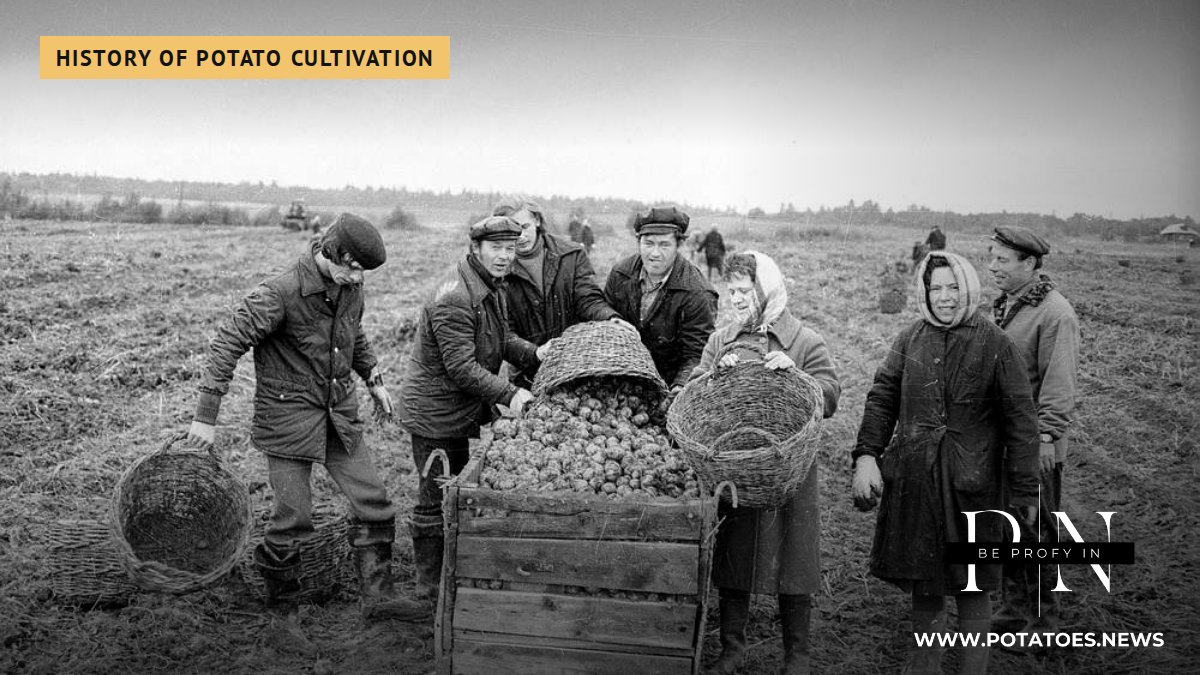
Photo: Workers from a Pereslavl furniture shop help the Glebovsky state farm with the potato harvest, Yaroslavl region, 1978 (illustrative). V. S. Spiridonov / Wikimedia Commons, CC BY-SA 3.0